This article contains spoilers. Read at your own discretion
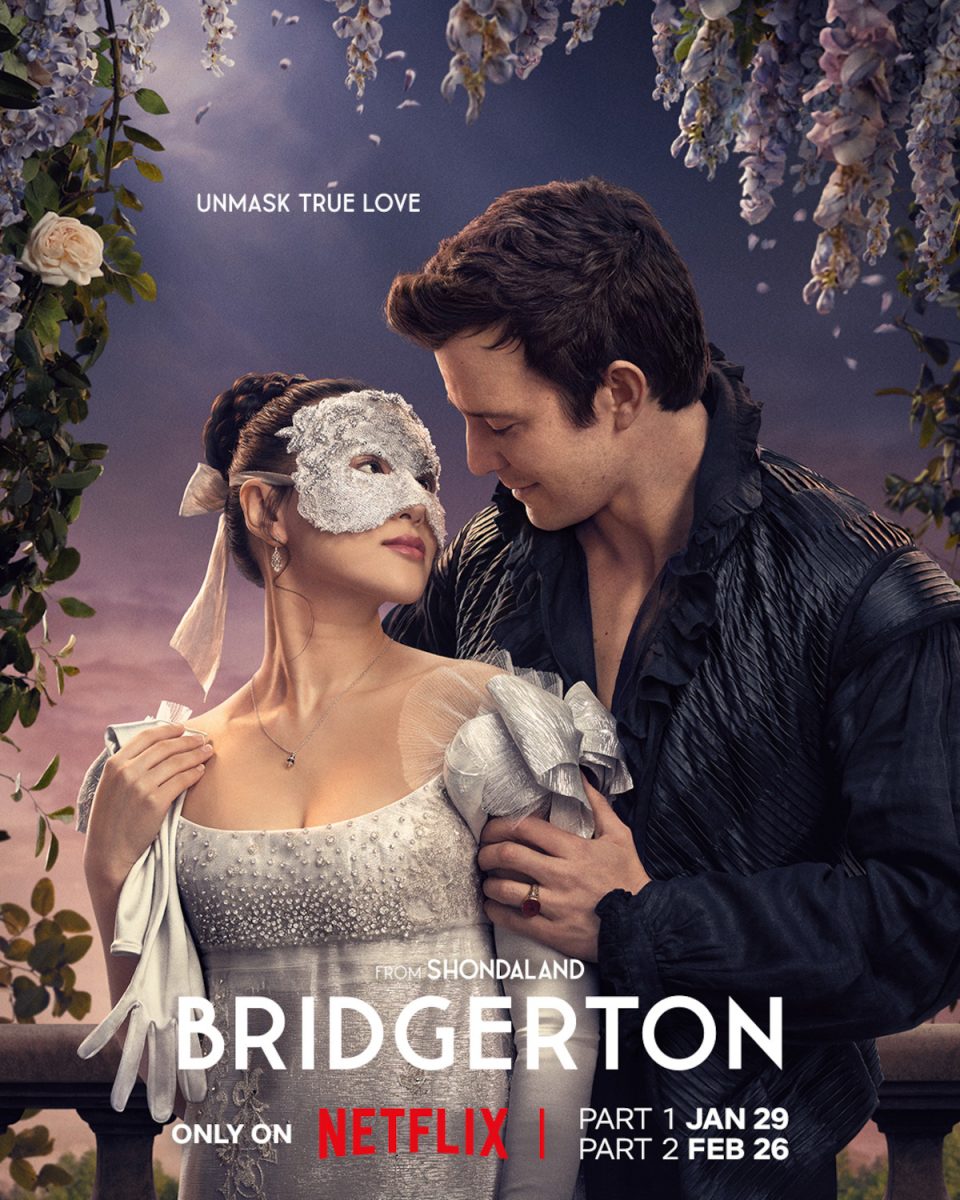
On Feb. 26, part two of Bridgerton’s fourth season was released on Netflix after the first four episodes debuted on Jan. 29. Bridgerton takes place in regency era London and is based on eight novels written by Julia Quinn following the Bridgerton siblings. The books and TV show follow the siblings navigating high society and the 19th-century marriage market. Bridgerton has become a pop culture phenomenon and continually is with the release of Season 4 Part Two, with thousands of edits and fans heading to social media to express their thoughts and discuss the show. Bridgerton and its producers pay attention to fine details to ensure each season they present a compelling central romance, maintain their modern adaptation of a Regency-era London, and enticing visual aesthetics to ensure their show remains a prevalent aspect of current entertainment.
One aspect of Bridgerton that ensures its strong prevalence in today’s society is the romance, storytelling, and subplots, which keep audiences emotionally invested. Season four, part two, centers on Benedict Bridgerton, played by Luke Thompson, and his forbidden romance with a maid named Sophie Baek, played by Yerin Ha. In earlier seasons, Benedict is seen spending his time in London’s nightlife drinking and avoiding social constructions, rather than committing to society. However, after asking Sophie to be his mistress, he began questioning his identity. The audience sees a shift of character who was once careless, letting deep romance guide him to vulnerability. Aramide Tinubu for Variety says, “The bulk of my criticism of “Bridgerton” Season four Part one focused on the muted romance between Sophie and Benedict. Thankfully, part two rectifies [this] issue…A large part of this shift is due to Benedict’s character development. During the first half of the season, he seemed unsure about himself…However, as the season evolves, he comes into his own, boldly stepping up for the woman he loves.” Tinibu’s commentary enforces the idea that Benedict’s growth strengthens the romance, making their relationship more authentic and emotionally rewarding for viewers. By allowing their audience to witness a character evolve through love and reflection, Bridgerton crafts storylines that keep viewers invested and wanting to consistently drive conversation around the show.
Another aspect of Bridgerton that makes it so prevalent in pop culture is the modern twist on an otherwise classical drama. The show highlights the marriage market, strict social hierarchy, and rigid gender expectations. However, since the audience may not relate to those things, it can create distance between the storyline and viewers. Although the audience may not relate to 19th century social etiquette, the modern twists and values are implemented throughout the show. For example, the plot swirls around Lady Whistledown, whose gossip column exposes individual scandals and secrets. This mirrors the way secrets spread through modern social media, where the audience can relate to how people enjoy others’ exploitation, until they are treated that way. By blending modern behaviors within the regency era, Bridgerton creates the feeling that the past is surprisingly current, allowing the audience to relate despite a lack of experience living in that time period.
Despite the popularity of Bridgerton, the novels were not particularly popular. The original concept is not necessarily popular to readers, but showrunners have committed to a detailed, intricate set design and extravagant fashion, so now viewers love it. In Forbes, Dana Feldman writes, “Queen Charlotte’s wigs are always a topic of conversation each season…The hair and makeup team assembled approximately 160 wigs for their background actors…When it comes to details and symbolism, season four of Bridgerton proves that every stitch, hue, and flourish tells its own scandalous and seductive story.” These visual details demonstrate how Bridgerton uses design as storytelling, elevating the series beyond the books, keeping it culturally relevant. Bridgerton season 4 reached a whopping 28 million views on Netflix during the week of Feb. 23, allowing the series to return to the No. 1 spot on the Netflix English TV list, maintaining its successful result. Although the original novels set up the foundation for the Bridgerton story, the show expands on the plot in a way the book could not; adding modern touches, engaging romances, and visually compelling storytelling to create a world that audiences do not just watch, but want to actively participate in.