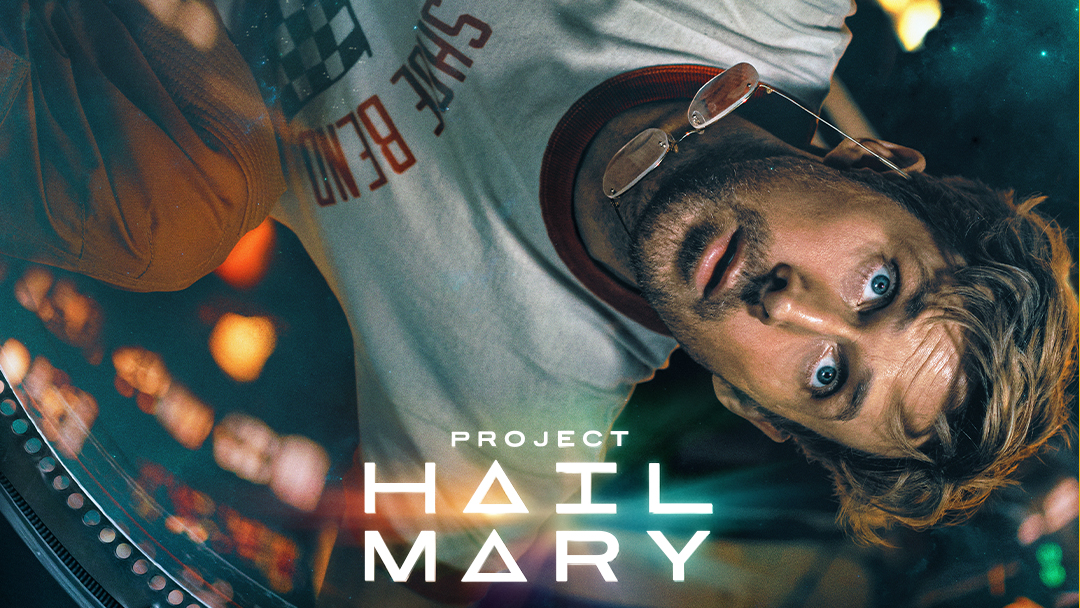
Project Hail Mary was released in theaters on March 20, 2026, based on a globally best-selling novel by Andy Weir, Project Hail Mary rose in the ranks almost immediately. Featuring the famous Canadian actor, Ryan Gosling and the well-known American actor Ken Leung, known for his work in Rush Hour, it began sparking significant praise from viewers, making Letterboxd Top 100 Movies of All Time almost immediately, and striking another major hit in the movie industry world.
Project Hail Mary opens with an attention-grabbing scene for the audience. Dr. Ryland Grace wakes up alone on a spacecraft, unsure of who he is, how he got there, or why he is drifting through space. His confusion reveals the truly horrid crisis that launched him into the unknown void, raising questions in the minds of many watchers. Quickly, the movie shifts to decades earlier, in a time when the sun is dying, and humanity is forced to confront the consequences of their environmental ignorance. Weather systems will soon collapse, food crops will fail, and the global population is facing a slow, inevitable extinction and erasure of the human race. This is when the film introduces Grace’s unique past life as a middle school science teacher, whose research on “The analysis of water-based assumptions and recalibrations of expectations for evolutionary models”, catches the attention of Eva Stratt, who is with the Petrova Task Force. Grace is taken into a lab to analyze the strange, small energy from the Sun. When Grace analyzes the samples, he realizes it is a living cell that can live on the Sun’s surface. That discovery flips the story from “space mystery” to a world crisis, and it is at that moment that the film actually earns the hype. As the crisis escalates, Grace is forced onto the mission as a scientific advisor, as the film introduces “Project Hail Mary,” the one‑way mission to Tau Ceti, or the only nearby star untouched by the Petrova infection. This is the point where many would expect the movie to fall into the usual “lone hero that saves the world through a dramatic space mission” stereotype. But instead of giving viewers a bold and fearless protagonist, viewers continue watching the movie in surprise.
Grace is not brave, eager, or even willing; he is terrified, unsure, and honestly a little bit of a coward. And that is exactly what makes the film more human. By breaking the stereotype of the super-human hero, the movie makes everything feel almost real and the character far easier to connect with. I believe Project Hail Mary acknowledges that expectation, but does not live up to it. Grace is not portrayed as some fearless, strong, big man who chose to save the world himself. Rather, he is a scientist who never wanted to be part of the mission in the first place. I walked into the theater already aware of its place on Letterboxd Top 100 Movies of All Time. Knowing that it was already ranked 100th, upon release, this made me want to watch it even more, and I believe the movie earned that special title by allowing more connections to be built with the protagonist and the viewers. Not making many believe they were watching just ‘another space movie’, but rather a redemption movie for all the other movies that fell into the category of being identical to each other, but with just different universes and disasters. Through the acting, story, and plot. In the end, I know the movie earns more of its praise than people expected. It is not just another ‘space movie,’ and it is not great simply because some may say so. I see it as blending scientific curiosity with emotional sincerity, creating a story that feels both urgent and unexpectedly hopeful. I would recommend that people watch this, since it is a reminder that even in the darkest situations, connection can still break through, and the film proves that so on and forth with the characters and touching storyline. Sci-Fi usually leans on huge casts and a cool, strong hero saving humanity alone. But in Project Hail Mary, the story is unlike many, and based on how Grace formed new connections trapped under impossible circumstances, building a friendship that feels more real than most human relationships in the same genre. It is not just refreshing, but it is what makes the movie hit closer to home. By centering the entire narrative on Grace’s unlikely connection, the film switches the typical and cliché heroism in many films for vulnerability, realism, and the kind of companionship that actually feels earned.