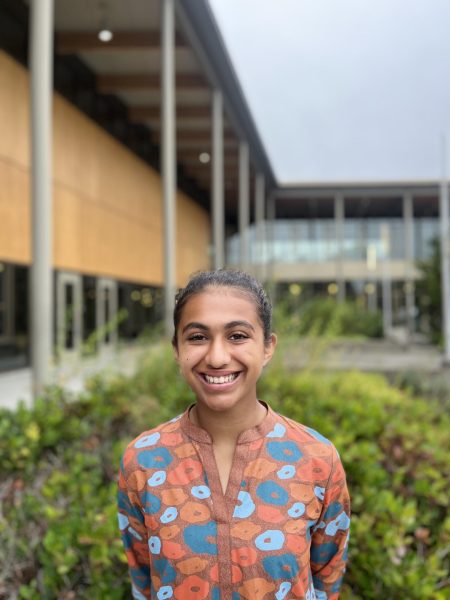
Every Saturday from Feb. to Mar., the Sammamish Mosque (SMA) has been hosting Iftars for the community during Ramadan. Iftar is the meal that breaks the fast at sunset. Ramadan, the holy month in Islam, is a time for fasting and reflection. From sunrise to sunset, Muslims around the world refrain from eating or drinking. I attended the second iftar out of four total, on Feb. 28, 2026, and am amazed by the unity and welcoming nature of the community.
As I entered the Sammamish Mosque, I was met with welcoming Salaams (greetings) from different people, as my family and I took off our shoes. My grandpa and little brother proceed to go to the men’s side, while my mother, grandma, and I go to the women’s side.
Bustle.
Women rush from place to place to get everything ready for when the crowd comes. Food comes in and out, spreading the delicious aromas, while mats are being taped down to sit on. Water is being passed out, with little bowls of dates, grapes, and a samosa. My mom and I immediately start helping out. Once everything is settled, and people start to pile in, we sit down and wait for the Adhan, the call to prayer, to play. The Adhan signals that the time for fasting has stopped.
Finally, the Adhan goes off, and everyone soon starts eating. After everyone finishes, we start to line up for prayer. Every single person in the whole Mosque, no matter who they are, is united when praying. Noreen Awan, a SMA community member, adds, “It is an atmosphere that feels unifying as we are a very diverse community with people from different cultures and backgrounds.” Every single person does the exact same thing: praying to connect with God, while expressing gratitude and seeking forgiveness.
After praying, we line up to get dinner, and the line snakes all the way back to the end of the hall. People hold empty plates and utensils while chatting with friends as the line slowly moves forward. On the women’s side, women volunteers give big servings, filling each plate and ushering everyone to move faster. Food aromas are spread, with a joyous and loud environment filled with conversations. Laughter echoes throughout the hall, and once people finish their food, they line up for the warm and sweet chai being given. After finishing the food and chai, and chatting a little longer, families begin making their way out of the mosque. My family and I meet up, and we also leave later on.
This specific Iftar that I went to focused on reducing waste. Large community gatherings can create waste from plastic water bottles and more. For this Iftar, the goal of the green initiative was to have people bring their own water bottles, instead of using the plastic ones provided. Aisha Shafique, another SMA community member, says, “The green initiative has helped us become more aware [and] … conscious of our environmental footprint.” Her perspective shows how united action during Ramadan fosters growth and accountability for our planet.
Frequently, throughout the whole night, I remember to be grateful for what I have, because not everyone has the same luxuries. Whenever I sit and wait for the Adhan to call after a long day of fasting, it makes me think about how the feeling of hunger is temporary, but for many, it is constant. Farzeen Rasheed, a member of the SMA community, expands, “Feeling hunger during Ramadan builds empathy for people who live with it daily. Fasting reminds us to pause and be intentional—whether that means wasting less, avoiding excess, or being more mindful about what and how much we consume.” Each Iftar holds unity and togetherness, and inspires meaningful action. And the result is a community brought closer together through gratitude and shared purpose.