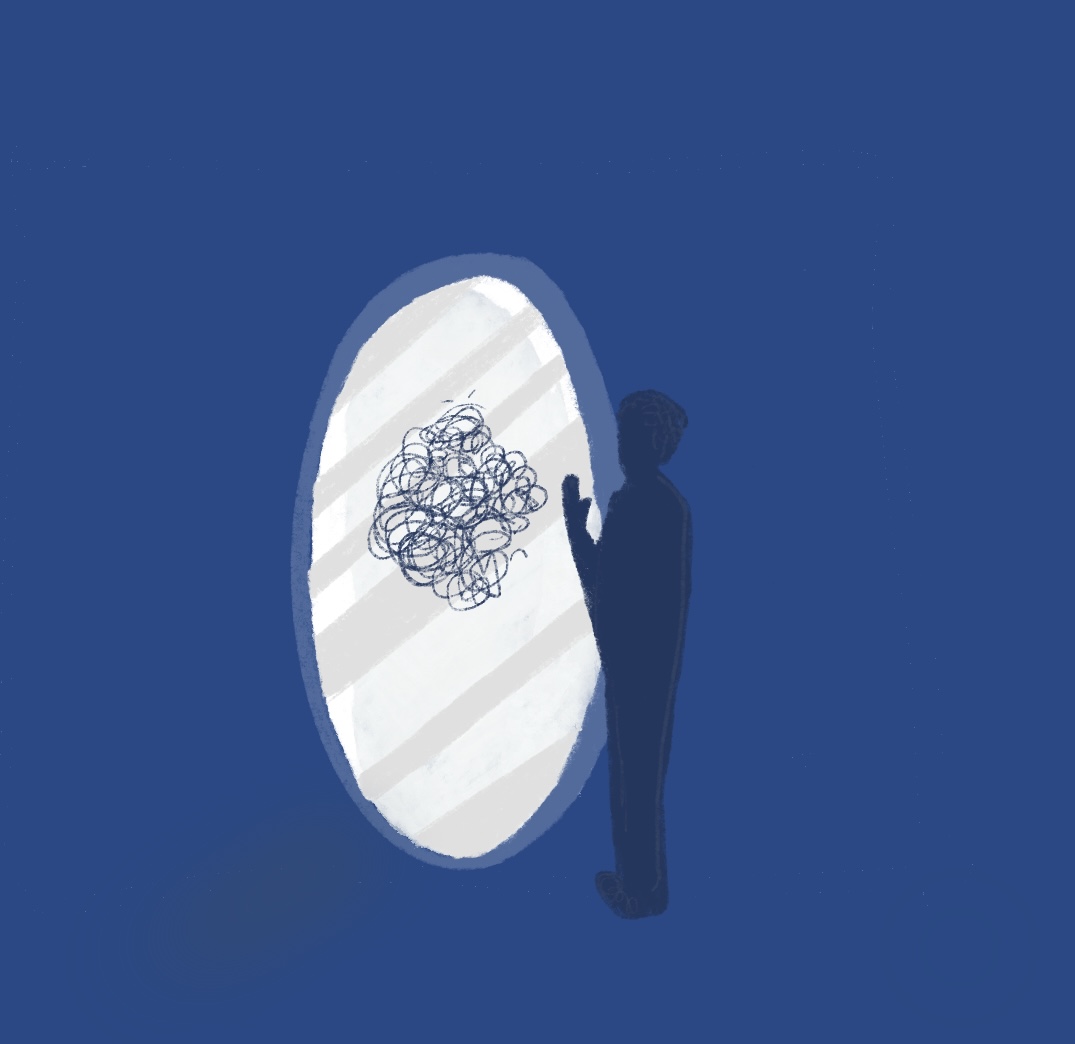
Every waking person has had bad thoughts, bad times, and bad experiences. You and I are no different; we are human too. People tend not to allow themselves to feel these things; they do not allow themselves to be human. Shame, guilt, anxiety, these are all factors that really make us think: Why do we self-sabotage so much? This is an issue many others are struggling with, but the problem is that we are not thinking. We are not taking the time to reflect on our lives, to reflect on ourselves. It is time to reevaluate.
Think back to a time when you messed up. Whether or not it was your fault, it was an error in your line of thought. It can be something as simple as making too many mistakes on your math homework, or something as complicated as accidentally saying something you didn’t mean to a loved one during an argument. But that does not make the whole problem itself, as what matters is to acknowledge your mistake, and how to handle the aftermath. When you make too many mistakes in one short period of time, your rationality tends to twist and bend. In life, there will be times when the fear of making a mistake causes you more harm than good. While it is good to avoid making mistakes, because of this fear, I have met many people who are perfectionists who are terrified of messing up, even in the slightest. When the time comes that these people do make a human error, they react strongly, as if they associate mistakes with failure.
When the brain makes too many mistakes, it sometimes tries to shut itself down from learning if overcome by strong emotions. Making mistakes is not a good feeling, so it leads to feelings of stress, anxiety, or even overthinking. It is not just the fear of making mistakes that causes us to feel unmotivated, but the idea that mistakes are associated with unavoidable failure, even when they do not have to be. Mistakes only lead to failure when you accept the belief that there is no other outcome. In other words, mistakes don’t make you less human. If you don’t allow your mistakes to be seen and heard when you’re still learning, you are not going to make progress. Accidents are a part of the process of branching towards success, so you cannot avoid failure without experiencing it yourself.
Self-sabotaging is something I suffer from. If I feel like my work is not good enough, I’ve struggled with the idea of presenting it to others out of sheer guilt and worry that I will be judged for it being imperfect or incomplete. I remember feeling overly nervous to show rough sketches of my artwork when I was little, or scared to present incomplete work to my teachers. I now know that feeling is all in my mind. The only person who judges you the most is yourself. Most of the time, what matters is not how good the result in your work is, but the effort shown within the work itself. That being said, the next time you feel like giving up or not doing something that you know you should, think about how much better you could become just by showing effort.
A big part of this process also has to do with overcoming your own thoughts. It is not an easy task to break through the fear of failure; it can be hard to make the right choice. When I feel under immense pressure, I think about my options and what they could lead to. Do not let the guilt of being incomplete outweigh complete failure, as some is always better than none. For example, your teacher may be disappointed in the moment for not fully completing your work, but if you’ve run out of time, it is best to accept what you have. However, it is not an excuse to be lazy or slack off, as you still need to try your best and try to get things done when they are supposed to be done. In short, it’s okay to be incomplete in life because trying your best is better than giving up.
There is a lot of confusion between being independent and asking for help. A lot of people like to think that asking for help is a normal and very practical thing to do, but sometimes, it is more of a task than it seems to be. You would be surprised to hear how many people are struggling every day, and nobody knows because they’ve never told anyone, including me. Whether it is mentally or physically, it happens. The reasons people do not ask one another for help vary from a big stem of emotional traffic. Many tend to only rely on themselves out of fear that they will be judged for wanting or needing assistance. In a room full of people who understand something, it is not uncommon to feel like you are the only one who is not dumb, but uninformed. Another reason people don’t like to ask for help is the belief that one does not need it. Independence is of great value, having the ability to rely on yourself rather than others. However, some go a bit overboard and do not ask for help when they truly need it. For example, at times, I am fearful of asking for help from adults (teachers, counselors, principals). It sounds ridiculous, as these types of people are there to help you; most of the time, they want to help you, but the fear of judgment and asking for help on something that I feel like I should already know is what keeps me from doing it. The worst part is that I truly do need help, but my own thoughts stop me. In short, despite what people may tell you, including you, do not stop yourself from asking for help. It seems scary at first, but getting through that awkward question is what leads to success, because it is better to be uncomfortable and informed rather than left in the dark about something you could have known or done if you had just asked.
When it comes to lifting yourself, sometimes you must go through the struggle of carrying that weight. You cannot expect a plant to grow without setting it outside to bask in the sunlight, so just remember to be better than your thoughts. Do not let them stop you from doing your best. Reevaluate, and you may see what has changed.